GIGABYTE R162-Z10 Bay Nvme Server Amd Epyc Cores 128GB 1U U.2 48 PC4-3200 1TB 2X SFP28
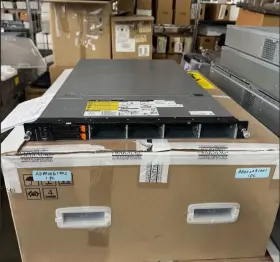
( Brand: Gigabyte ), ( Manufacturer Part Number: R162-Z10 ), ( Network Connectivity: Wired-ethernet ), ( Ram Size: 128 Gb ), ( Network Management Type: Fully Managed ), ( Item Length: 730 Mm ), ( Memory Type: Ddr4 Sdram ), ( Processor Type: Epyc ), ( Processor Speed: 2.3 Ghz ), ( Network Type: Fibre Channel ), ( Form Factor: Rack Mountable ), ( Type: Server ), ( Processor Manufacturer: Amd ), ( Maximum Ram Capacity: 2 Tb Max Capacity ), ( Item Height: 43.5 Mm ), ( Interface: Ethernet ), ( Item Width: 438 Mm ), ( Country Of Origin: China ), ( Product Line: Rack Server )
Review GIGABYTE 1u Bay Us.2 Nvme Server Amd Epyc 48 Cores 1tb 2x
Introducing the Gigabyte R162-Z10 1U 10 Bay U.2 NVMe Server, an ideal solution for enterprises and data centers seeking high-performance, scalability, and energy efficiency. This server is meticulously designed to accommodate the latest AMD EPYC 7003 series processors, featuring up to 48 cores and 128GB DDR4 PC4-3200 memory.
The server chassis is a compact 1U form factor, making it an excellent choice for space-constrained environments. It supports ten U.2 NVMe SSD bays, allowing for exceptional data read and write speeds. These NVMe drives offer a significant improvement over traditional SAS or SATA drives, providing faster access times and increased I/O throughput.
Two built-in 100Gb SFP ports (SFP28 compatible) ensure high-speed data transfer, enabling seamless connectivity to networking equipment and other servers. The server's power consumption is also noteworthy, as it employs advanced power management technologies to minimize energy consumption and reduce operational costs.
The Gigabyte R162-Z10 is engineered for flexibility and ease of maintenance. It features a tool-less design for the installation and removal of drives, allowing for quick and hassle-free upgrades. Additionally, the server's hot-swappable HDD/SSD bays enable continuous operation even during drive replacement, minimizing downtime.
This server is perfect for various applications, including database, virtualization, high-performance computing, and artificial intelligence. It also supports a wide range of operating systems, including Linux and Windows, ensuring compatibility with most popular enterprise software.
In summary, the Gigabyte R162-Z10 1U 10 Bay U.2 NVMe Server offers impressive performance, scalability, and energy efficiency, making it a top choice for businesses and data centers seeking to upgrade their IT infrastructure. With its support for the latest AMD EPYC processors, high-speed NVMe drives, and robust connectivity options, this server is an investment in future-proof technology.
Pros and Cons of Buying Gigabyte R162-Z10 1U 10 Bay U.2 NVMe Server with AMD Epyc 48 Cores, 128GB PC4-3200, and 1TB 2x SFP28
1. Pros:a. High-Performance Processor: The AMD Epyc 48-core processor offers excellent computational power for data-intensive workloads, making it suitable for handling large databases, machine learning, and high-performance computing tasks.
b. NVMe Storage: Ten U.2 NVMe bays allow for the installation of fast solid-state drives, providing significantly higher read and write speeds compared to traditional SAS or SATA drives.
c. Scalability: With its 1U form factor, the server is compact yet offers a high storage capacity, making it an ideal choice for businesses that need to store large volumes of data while minimizing rack space.
d. Dual 100GbE Network Interfaces: The server comes with two SFP28 ports, enabling high-speed data transfer and reducing latency for applications requiring fast network connectivity.
e. ECC Memory: The 128GB PC4-3200 ECC memory ensures data accuracy and reliability, reducing the likelihood of data corruption and improving overall system stability.
2. Cons:a. High Cost: The Gigabyte R162-Z10 server is a high-end solution, and its price point reflects the advanced features it offers. This may not be an affordable option for small businesses or those with limited budgets.
b. Complexity: With its advanced features, the server may require a higher level of expertise to configure, manage, and maintain. This could add to the total cost of ownership for businesses that do not have an in-house IT team.
c. Power Consumption: Due to the high-performance components and the need for cooling, the server may consume more power compared to standard servers, leading to increased energy costs.
Conclusion:The Gigabyte R162-Z10 1U 10 Bay U.2 NVMe Server with AMD Epyc 48 Cores, 128GB PC4-3200, and 1TB 2x SFP28 is an excellent choice for businesses that require high computational power, fast storage, and network connectivity. Its advanced features make it suitable for handling large databases, machine learning, and high-performance computing tasks. However, its high cost and complexity may not be ideal for small businesses or those with limited budgets. Careful consideration of the business's specific needs, resources, and budget is essential before deciding to invest in this server.
Recommendation:For businesses that can afford the investment and have the necessary expertise to manage and maintain the server, the Gigabyte R162-Z10 is a highly recommended option due to its impressive performance capabilities and advanced features. For those with more modest requirements or limited budgets, alternative solutions with lower core counts, fewer storage bays, or less expensive components may be more suitable.
Details:
Storage heavy applications. AMD AOCL AMD Optimizing CPU Libraries: Use these libraries to speed up math operations. SERVER USE CASE: Cloud Computing. Direct Contact for sales, customization, troubleshooting, technical help, RMA's.
Chassis PCI slots: Motherboard Slot. This server does not come with PCI-E Expansion risers. Hardware highlights. Server Hosting.
Warranty: Standard. 8 slots for DDR4 RAM Dims. Similar to Dell Power Edge R6515, Super micro AS -1114S-WN10RT, Leno SR635. It uses a single High End AMD Epyc 7642 CPU at 48 Cores.
Key Setup and Optimization Steps. Bit to fit model's within available system RAM. PSU Slots: Dual Slots. This Server does not come with outer rails.
This Server is a Gigabyte R162-Z13 variant of the R162-Z10 model. Performance Considerations. Mounting: Inner Rails Only, no Outer included. VLLM: Optimized for throughput and batch processing.
Rear Bays: None. AI Inference via CPU power.
part #: r162z10 prices
- $499.99-$1699.00
specifications chompiserver:
- brand: Gigabyte
- mpn: R162-z10
- network connectivity: Wired-ethernet
- ram size: 128 Gb
- network management type: Fully Managed
- item length: 730 Mm
- memory type: Ddr4 Sdram
- processor type: Epyc
- processor speed: 2.3 Ghz
- network type: Fibre Channel
- form factor: Rack Mountable
- type: Server
- processor manufacturer: Amd
- maximum ram capacity: 2 Tb Max Capacity
- item height: 43.5 Mm
- interface: Ethernet
- item width: 438 Mm
- country of origin: China
- product line: Rack Server
payments chompiserver:
- credit card: Diners-club
- other
- wallet: Apple-pay
general chompiserver:
- condition: Used
- Enterprise Networking, Servers > Servers, Clients Terminals > Computer Servers
returns chompiserver:
- policy: Returns Accepted
- method: Money back
- time: 30 Days
- paid by: Buyer
seller chompiserver:
- # reviews: 11483
- city: Sunnyvale, California
- rating: 99.6%
offer chompiserver:
- availability: In Stock
- sold: 0
- options: Ship-to-home
- best offers: True
- started: April 24, 2026
- quantity: 2
shipping chompiserver:
- class: Standard
- type: Fixed
- service: UPS Ground
- cost: $85.00
- transit: 5-11 Days
- carrier: UPS
Gigabyte R162-Z10 Is Similar To:
- Gigabyte G293-z42 64 Core 2 X Amd 9334 2.7ghz 384gb Ram 8 1.92tb Ssd L40s (39.5% similar) Turn-around time,: orders are made to order and turn. Individual components. Comes with 30 day warranty. Are in the server. Around time depend on what specs. Lead time depends on the specs of server ordered. Hardware warranty on...(May 25th, 2024)
- Gigabyte G493-zb2 96 Core 2 X Amd 9454 2.75ghz 384gb Ram 1 3.84tb Ssd 8 L40s (37.6% similar) Are in the server. Turn-around time,: orders are made to order and turn. Comes with 30 day warranty. Lead time depends on the specs of server ordered. Hardware warranty on configured...(May 30th, 2024)
- Gigabyte G242-z11 48 Core Amd 7643p 2.3ghz 256gb Ram 2 X 1tb Ssd 1 L40s (42.5% similar) Server model: : Gigabyte G242-Z11 rev. Hardware warranty on configured. Turn-around time,: orders are made to order and turn. Comes with 30 day warranty. Around time depend on what specs. Shipping: shipping costs...(June 1st, 2024)
- Gigabyte G293-z22-aap1 G293-z22 48 Core 2 X Amd 9254 2.9ghz 384gb Ram 1 1tb Ssd 8 L40s (40% similar) Individual components. Shipping: shipping costs listed are to the 48 contiguous states. Comes with 30 day warranty. Around time depend on what specs. Lead time depends on the specs of server ordered. Are in the server. Turn-around time,: orders are made to order and turn. Graphics card...(June 5th, 2024)
- Gigabyte S472-z30 Model 24 Core Amd Epyc 7443p 2.85ghz 512gb Ram X 1tb Ssd (50.9% similar) Turn-around time,: orders are made to order and turn. Shipping: shipping costs listed are to the 48 contiguous states. Individual components. Lead time depends on the specs of server ordered...(June 10th, 2024)
- Gigabyte Mc13-le0 1u Am5 And Amd Ryzen 9 7900 3.7ghz 128gb Ddr5 Ram 2x 1.92t Nvme (44.7% similar) Looking for something specific. Super micro 1u case with platinum power supply and 4x satay 3 hot swap drives. Inside the chassis is a Gigabyte MC13-LE0 server board. Denaturing active heat sink. This server comes with an amd risen 7/7 7 offering a standard frequency of 3.8 ghz, 8 cores, and...(June 10th, 2024)
- Gigabyte R283-z92 R283-z92 48 Core Server 2 X Amd 9224 2.5ghz 384gb Ram 24 1tb Ssd (47.7% similar) Comes with 30 day warranty. Around time depend on what specs. Processor s: 2 x amd epyc 9224 processor 24-CORE 2.5GHZ 64MB cache 200W. Lead time depends on the specs of server ordered. Shipping: shipping costs listed are to the 48 contiguous states...(June 13th, 2024)
- Gigabyte E283-z90 Server E283-z90 32 Core Amd 9124 3.0ghz 384gb Ram 3 X 1tb Ssd (49.7% similar) Hardware warranty on configured. Shipping: shipping costs listed are to the 48 contiguous states. Server model are in the server. Around time depend on what specs. Processor s: 2 x amd epyc 9124 processor 16-CORE 3.00GHZ 64MB cache 200W...(June 18th, 2024)
- Gigabyte R152-z33 Rev A00 1u Blade Server (44.3% similar) Gigabyte R152-Z33 rev. 1U, amd epyc 7313P 16-CORE processor 3.0GHZ, 128GB ram 8X16GB sticks, four of below HDD's: CAPACITY:3.84 tb form FACTOR:U.2 15MM interface:pie 4.0 X4, nvme lithography TYPE:144L TLC 3d band, windows server 2022 data center OS, was used for only 1 year as SQL server and...(June 20th, 2024)
- Gigabyte 3080 Cryptkeeper 8 Gpus Server (31.3% similar) The units were then converted to air cooled. Eight ass TURBO-RTX3080-10G GPS. There are issues with erroneous error messages, but the unit was operated very little and hardware seems to be in good shape. I am willing to let go for $3,500. Power cables/adapter included. For the right...(June 23rd, 2024)
- Gigabyte G292-2g0 Gpu Server Ai Training Inference Hpc No Barebone (38.7% similar) The 2u form factor and 31.5 inch length make it a great choice for those looking to build high-performance server.the server is equipped with 2 x 10G network connectivity runs on intel processors. It is ideal for those looking to build a server enterprise networking, AI training, or hoc needs...(July 8th, 2024)
