INTEL VCA1283LVV-15-CT Visual Compute Accelerator
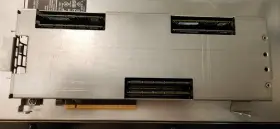
( Brand: Intel ), ( Manufacturer Part Number: VCA1283LVV-15-CT ), ( Type: Visual Compute Accelerator ), ( Network Connectivity: Wired-ethernet ), ( Ram Size: 32 Gb ), ( Processor Type: Xeon ), ( Processor Speed: 2.9 Ghz )
Review INTEL Vca1283lvv Visual Compute Accelerator
The Intel Visual Compute Accelerator (VCA) 1283LVV-15-CT is a powerful and versatile hardware solution designed to accelerate visual computing workloads. This Visual Compute Accelerator is based on Intel's FPGA technology, providing the flexibility and programmability of a custom-designed circuit while maintaining the ease of use and compatibility of a standardized product.
Measuring 15 x 15 cm, this VCA is compact yet capable of delivering impressive performance. It features 128 Intel Stratix 10 FPGA fabric slices, each with a processing capacity of 3.3 trillion operations per second. This translates to a total processing capacity of 422.4 teraflops, making it an ideal choice for applications that require high-performance visual processing, such as real-time object detection, image and video analytics, and augmented reality.
The Intel VCA 1283LVV-15-CT comes with a total of 16 GB of high-bandwidth memory (HBM2), allowing for efficient data transfer and minimizing latency. This memory is distributed across two HBM2 stacks, each with a capacity of 8 GB and a bandwidth of 512 GB/s, ensuring that data can be accessed quickly and reliably.
The VCA supports a wide range of input and output interfaces, including PCIe Gen3 x16, 10GbE Ethernet, and HDMI 2.0. These interfaces enable seamless integration with a variety of host systems and peripherals, making it easy to deploy the VCA in different environments.
Intel's OpenVINO toolkit is fully supported on the VCA 1283LVV-15-CT, allowing developers to easily create and deploy deep learning models for visual computing applications. The VCA also supports other popular frameworks like Caffe, TensorFlow, and MXNet, ensuring broad compatibility and flexibility.
In summary, the Intel Visual Compute Accelerator 1283LVV-15-CT is a high-performance, programmable, and versatile hardware solution designed for accelerating visual computing workloads. With its impressive processing power, ample high-bandwidth memory, and extensive interface support, it is an excellent choice for applications that demand real-time image and video processing, object detection, and augmented reality.
The Intel Visual Compute Accelerator (VCA) 1283LVV is a high-performance computing solution designed for deep learning and computer vision workloads. Here are some pros and cons that might help you decide if this accelerator is a good fit for your needs:
Pros:1. High Performance: The VCA 1283LVV is based on Intel's latest FPGA technology, which delivers high performance for deep learning and computer vision workloads. It can handle large-scale models and complex data sets with ease.
2. Flexibility: FPGAs are programmable, which means you can customize the accelerator to meet your specific requirements. You can also use open-source frameworks like TensorFlow and OpenCV with the VCA 1283LVV.
3. Low Power Consumption: The VCA 1283LVV consumes less power than GPUs or CPUs for the same workload, making it an energy-efficient solution for data centers and edge computing applications.
4. Small Form Factor: The VCA 1283LVV has a small form factor, making it easy to integrate into various systems, from data centers to edge devices.
5. Security: Intel's FPGAs offer robust security features, including hardware-based protection against side-channel attacks and support for Intel's Software Guard Extensions (SGX) to help protect data in memory.
Cons:1. Cost: The VCA 1283LVV is a high-performance, custom solution, which comes with a higher price tag compared to GPUs or CPUs.
2. Complexity: FPGAs can be more complex to program and integrate compared to GPUs or CPUs. You may need specialized knowledge or external help to get the most out of this accelerator.
3. Limited Availability: The VCA 1283LVV is a relatively new product, and availability may be limited, making it harder to find and purchase.
4. Compatibility: The VCA 1283LVV may not be compatible with all software and hardware platforms, so it's essential to check the compatibility before making a purchase.
In conclusion, the Intel Visual Compute Accelerator 1283LVV is a high-performance, flexible, and energy-efficient solution for deep learning and computer vision workloads. Its programmability and customizability offer significant benefits, but these come with a higher cost, complexity, and potential compatibility issues.
If you're working on a large-scale deep learning or computer vision project that requires high performance, low power consumption, and customizability, the VCA 1283LVV is definitely worth considering. However, if you have a smaller budget, prefer a more standardized solution, or don't have the resources to program and integrate an FPGA, you might want to explore other options like GPUs or CPUs.
Ultimately, the decision to buy the Intel Visual Compute Accelerator 1283LVV depends on your specific use case, budget, and technical expertise. If you believe this accelerator aligns with your requirements, it could be a valuable investment that delivers significant performance gains and flexibility for your deep learning and computer vision projects.
Details:
Intel VCA 1 card 3 built in computers with Xeon Cups and each has 2X8gb RAM.
part #: vca1283lvv15 price
- $1925.00
specifications chompiserver:
- brand: Intel
- mpn: Vca1283lvv-15-ct
- type: Visual Compute Accelerator
- network connectivity: Wired-ethernet
- ram size: 32 Gb
- processor type: Xeon
- processor speed: 2.9 Ghz
general chompiserver:
- condition: Used
- Enterprise Networking, Servers > Servers, Clients Terminals > Computer Servers
seller chompiserver:
- rating: 100.0%
- city: Aurora, Colorado
- # reviews: 2
returns chompiserver:
- policy: No Returns
shipping chompiserver:
- type: Calculated
- carrier: USPS
- transit: 4-10 Days
- service: USPS Priority Mail
- class: Expedited
- cost: $11.01
payments chompiserver:
- credit card: Discover
- other
- wallet: Apple-pay
offer chompiserver:
- options: Ship-to-home
- availability: In Stock
- quantity: 4
- sold: 0
- started: November 11, 2025
Intel VCA1283LVV-15 Is Similar To:
- Intel H26989-273 Compute Module Hns2600tp Server Board S2600tp 2xlga2011-3 Ddr4 (34.5% similar) Storage solutions, power and testing equipment. Condition: off-lease equipment. We buy and sells networking equipment, servers, workstations, laptops parts thereof. All listed items are sold with a DOA warranty. Server parts...(August 15th, 2024)
- Intel Hns2600kpr Compute Module Server S2600kpr Dual Xeon E5-2620v3 64gb Ddr4 (29.2% similar) The item includes original accessories. All devices are factory reset. The item may be missing the original packaging or protective wrapping, it in but not sealed. Open box Intel compute module server S2600KPR dual xeon E5-2620V3 64GB DDR4 condition: the item is in excellent, new condition with...(December 23rd, 2024)
- Hp P90002-005 Hpe Proliant Compute Ml350 Gen12 4u Tower Server 1 X Intel Xeon 6505p 2.20 Ghz (19.5% similar) Enhanced server data security: encryption and key management, IL managed encryption, efi-managed encryption, self-encrypting drives seed for enhanced data-at-rest protection. Sanitize data with one-button secure erase: this method complies the national institute of standards and technology...(April 6th, 2026)
